Somebody Licensed That Feeling: How Movies Started Renting Their Emotion
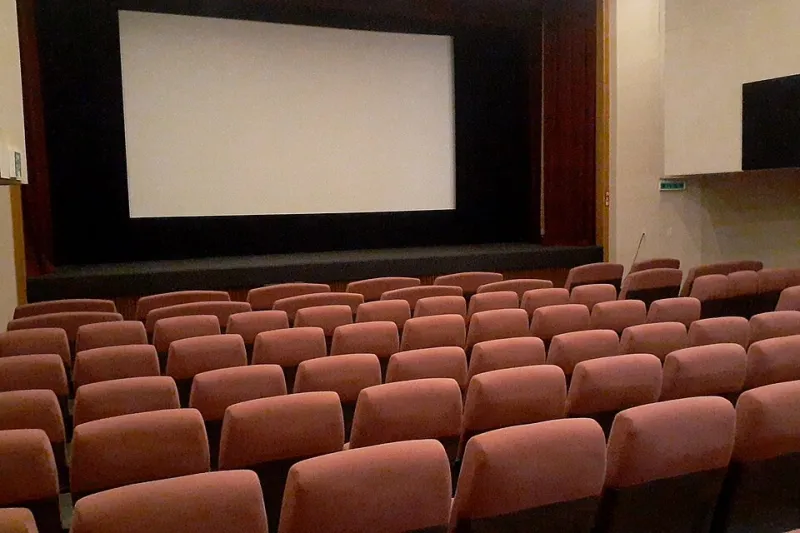
Photo: Razgrad, CC BY-SA 4.0, via Wikimedia Commons
There is a scene in a very expensive movie from the last few years where a character walks down a hallway in slow motion, and a song you have heard at a grocery store eleven times does all the emotional labor. The actor is fine. The lighting is fine. The dialogue is three lines. And yet the whole theater goes quiet, because somebody in a licensing office wrote a check and a 1979 B-side started playing.
I am not mad about it. I am fascinated by it. Because at some point in the last decade, the needle drop stopped being a garnish and became the meal.
The Slow-Motion Walk Has a House Band Now
Watch enough modern blockbusters and you start to notice the rhythm. Big emotional beat arrives. Director reaches for a track that is older than the protagonist's parents. Camera goes half speed. Somebody's coat flaps. It works — and it works so reliably that it has become the default setting for feeling.
This is not new, exactly. Wayne's World did it with 'Bohemian Rhapsody.' Reservoir Dogs did it with 'Stuck in the Middle With You,' and that one was a joke dressed as a threat. The difference is volume and dependency. Scorsese used pop songs as narration, a second voice telling you what the character would never say out loud. Now the song is often the only voice in the room.
When Stranger Things sent Max running to 'Running Up That Hill' in 2022, that was a genuine piece of chemistry — a 1985 song, a scene built around it, a streaming bump nobody planned for. It also taught every executive in town a lesson they have been over-learning ever since.
Licensing Is Cheaper Than Writing
Here is the unglamorous business truth. A needle drop costs money. A needle drop that lands costs money and buys you a montage, a transition, a trailer moment, and a TikTok clip in one transaction. Rewriting a third act to actually earn that feeling costs a lot more.
So the song gets the job. A marriage falls apart to a Motown cut. A training montage gets a stomping garage-rock riff. A villain gets a slowed-down cover of something sweet, because nothing says 'this guy is bad' like a choir whispering a song your mom loves. Whole marketing campaigns are built on a single two-second audio cue arriving on the downbeat of a logo.
Music supervisors are, functionally, co-authors of the emotional architecture of modern film. They are also the people most likely to be left off the press tour entirely. Sound designers got a whole cultural moment of respect. Editors get the 'saved it in post' mythology. Supervisors get a line in the credits and a playlist nobody credits them for building.
The Trailer Cut to Three Songs
If you want to see how codified this has become, watch a trailer block. The same three structural sounds show up again and again: the eerie solo vocal, the percussive build with no melody, the drop that lands on a title card. It is not that trailers are lazy. It is that trailers are tested, and the version that makes people lean forward is the version that wins, and it always wins with the same sound.
Which is why a movie can feel nostalgic before you have seen a frame of it. The marketing is borrowing a feeling from a song you already own, then handing you a ticket stub as a receipt.
When It Fails, It Fails Loudly
A needle drop goes bad when the song is doing work the script skipped. You can feel it. The characters have known each other for nine minutes of screen time, the track swells, and instead of catharsis you get a slight embarrassment, like watching someone propose at a stranger's wedding.
The tell is specificity. A great use of a song is about something — a lyric that contradicts the image, a track that a character would actually own, a needle drop that costs the scene something. A lazy one is a mood sticker. It says 'feel this' without answering why.
The Fix Isn't Fewer Songs
I don't want fewer needle drops. I want needle drops that are arguments instead of announcements. Give me the song that fights the scene. Give me the track that is slightly wrong, the one that makes you uncomfortable before it makes you feel good.
And give the supervisor a chair at the table in the awards conversation, because right now the least-credited craft in the building is the one deciding whether the third act lands. The song did all the acting. Somebody should at least say thank you.