You Never Hired Them, So Stop Acting Like They Quit on You
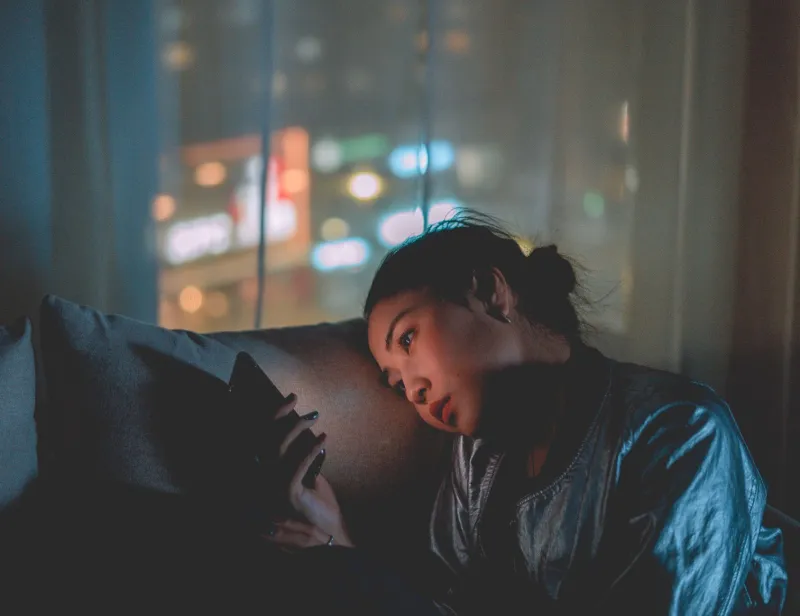
Let me paint you a picture. You've been following someone online for three, maybe four years. You've watched every video, bought the merch, defended them in comment sections at 11pm on a Tuesday like it was your full-time job. Then one day they post something — a life decision, a political opinion, a new direction for their content — and suddenly the comment section looks like a HR complaint department.
"I feel so betrayed."
"This isn't the person I followed."
"They owe their fans better than this."
Do they, though? Do they really?
This is the parasocial paradox in its most raw, uncomfortable form. And honestly, it's one of the most fascinating — and slightly alarming — dynamics in entertainment culture right now.
What a Parasocial Relationship Actually Is (And Isn't)
The term "parasocial" has been floating around pop psychology circles long enough that it's started to lose its meaning. People throw it around like a diagnosis. But at its core, a parasocial relationship is simply a one-sided emotional connection — you feel like you know someone who has absolutely no idea you exist.
This isn't new. People felt this way about Johnny Carson. About Oprah. About every major celebrity before the internet existed. The difference now is that creators — YouTubers, podcasters, TikTokers, Substack writers — have built entire careers on simulating a two-way relationship. The casual camera angles, the "hey guys" intros, the vulnerability porn of sharing mental health struggles or relationship drama — all of it is designed, consciously or not, to make you feel like a friend rather than an audience member.
And it works. Boy, does it work.
The problem starts when fans forget that "feeling like a friend" and "actually being a friend" are not the same zip code. They're not even the same state.
The Invisible Contract Nobody Signed
Here's where it gets psychologically interesting. When fans feel betrayed by a creator, they're usually reacting to a perceived violation of an agreement that was never actually made. Somewhere along the way, watching someone's content consistently became — in the fan's mind — a transaction. I gave you my time, my attention, my money. In return, you stay exactly who I decided you were.
That's not a relationship. That's a hostage situation dressed up in subscriber counts.
Think about some of the biggest creator controversies of the last few years. A popular fitness influencer starts talking about spirituality. A gaming YouTuber pivots to political commentary. A beloved podcast host admits they've changed their views on something they were previously passionate about. In each case, the audience revolt isn't really about the creator doing something wrong — it's about the creator doing something different. Something that disrupts the mental image the fan has spent months or years constructing.
We built a version of them in our heads. And when the real person doesn't match the avatar, we blame the real person.
Growth Is Not a Betrayal
Let's be honest about something. People change. That's not a flaw in the human operating system — it's a feature. A creator who made videos about budget travel at 24 might genuinely not care about budget travel at 34. A comedian who built an audience on one style of humor might find that style doesn't fit who they've become. An influencer who overshared their relationship might decide, after some real-life consequences, that privacy is worth more than engagement.
Every single one of those choices is valid. Every single one of those choices is also going to upset someone who preferred the old version.
But here's the uncomfortable truth: creators don't owe you a static personality. They never did. What you were actually buying — with your attention, your clicks, your subscription dollars — was access to whoever they happened to be at that moment. Not a lifetime guarantee that they'd stay frozen in amber for your convenience.
This is especially worth examining when fans react to creators making moral choices that differ from their own. When someone with a large platform changes their stance on an issue, or chooses not to speak on something the audience thinks they should address, the reaction can be genuinely vicious. As if the creator's silence or evolution is a personal attack on the fan's worldview.
Spoiler: it isn't. You just wanted a mirror, not a person.
The Platform Made It Worse
It would be unfair not to acknowledge that the platforms themselves have engineered this problem. Instagram, YouTube, TikTok — they all reward creators for performing intimacy. The algorithm loves vulnerability. It loves consistency of persona. It loves the kind of content that makes you feel like you're part of something, because that feeling keeps you scrolling.
So creators get trained — financially incentivized, really — to present themselves in ways that maximize that parasocial bond. They share more than they probably should. They respond to comments in ways that simulate friendship. They use language like "our community" and "you guys are my family" because it converts.
Then when those same creators try to establish a boundary, pull back, or simply change, fans feel like the rug got pulled. And the platforms offer zero help — in fact, they usually amplify the drama, because outrage drives engagement just as well as warmth does.
The whole ecosystem is kind of a mess, honestly.
So What Are We Supposed to Do With This?
I'm not here to tell you that your feelings aren't real. If a creator you loved shifts in a direction that genuinely doesn't work for you anymore, that's a legitimate loss. It's okay to be disappointed. It's okay to stop watching. It's even okay to be a little sad about it.
What's not okay — and what I'd argue is genuinely worth examining in yourself — is the leap from disappointment to entitlement. The assumption that someone's personal choices, professional pivots, or evolving beliefs are somehow owed to you as a fan. That's the part that crosses a line.
The healthiest version of engaging with creator content is probably the same as being a fan of a musician. You loved their first album. Their new album isn't for you. That's fine. You don't get to demand they remake the first album forever. You thank them for what they gave you and move on.
Creators are people doing a job in public. Sometimes the job changes. Sometimes they change. The ones who are doing it right are the ones growing into something real, even when it's inconvenient for their audience.
And the ones in the audience who are doing it right? They're the ones who can appreciate what they had without trying to own what comes next.
That's the deal. It always was.